GenAI Document Intelligence Platform
Enterprise UX
Gen AI Product Design
Chat RAG
AI Trust & Transparency
Internal Tools
0 → 1 Product
Role
Lead Product Designer & Acting Product Manager
Platform
Power Apps Canvas, Azure OpenAI, Chat RAG Architecture
Mission
Design and launch an internal GenAI chat RAG platform that allows professionals to analyze complex financial and legal documents instantly while maintaining trust, traceability, and accuracy.
Outcome
Reduced manual document review time by hundreds of hours and enabled faster, more confident decision-making through transparent AI-powered document analysis.
Investment professionals needed to extract critical information from documents hundreds of pages long.
Manual searching through investment agreements and prospectuses took hours
Critical insights buried in dense legal and financial language
Existing AI tools not trusted due to hallucinations and lack of citations
Zero tolerance for incorrect information in regulated financial environments
Design a GenAI system that delivers speed without sacrificing trust, traceability, or accuracy.
This became a trust and explainability design problem, not just an AI interface. Designing for regulated environments required balancing speed, transparency, accuracy, and usability in every interaction.
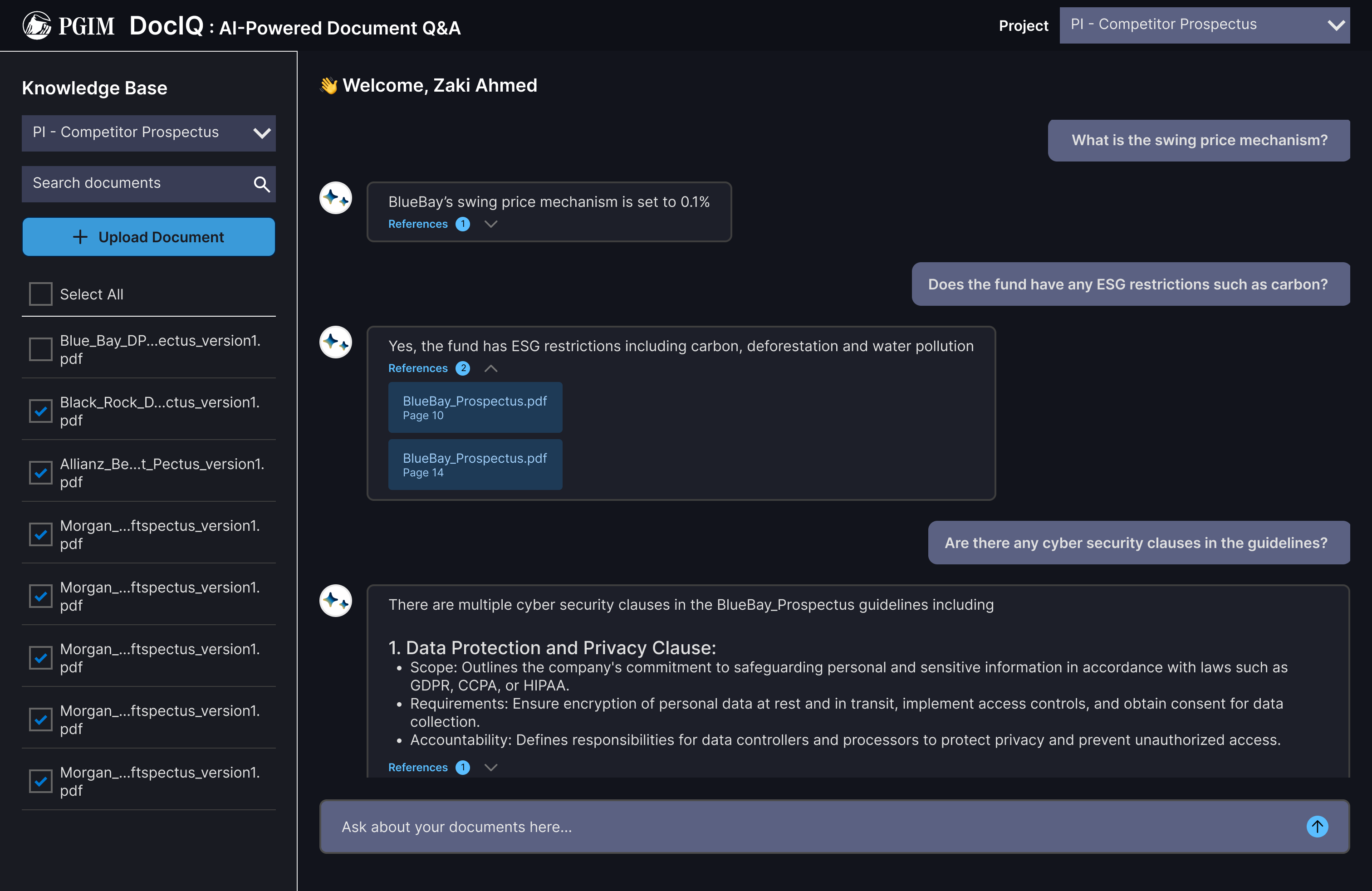
Users ask natural language questions across one or multiple documents and receive grounded answers with references. Transforms document review from manual searching to conversational analysis.
Eliminated hours of manual document searching per review cycle.
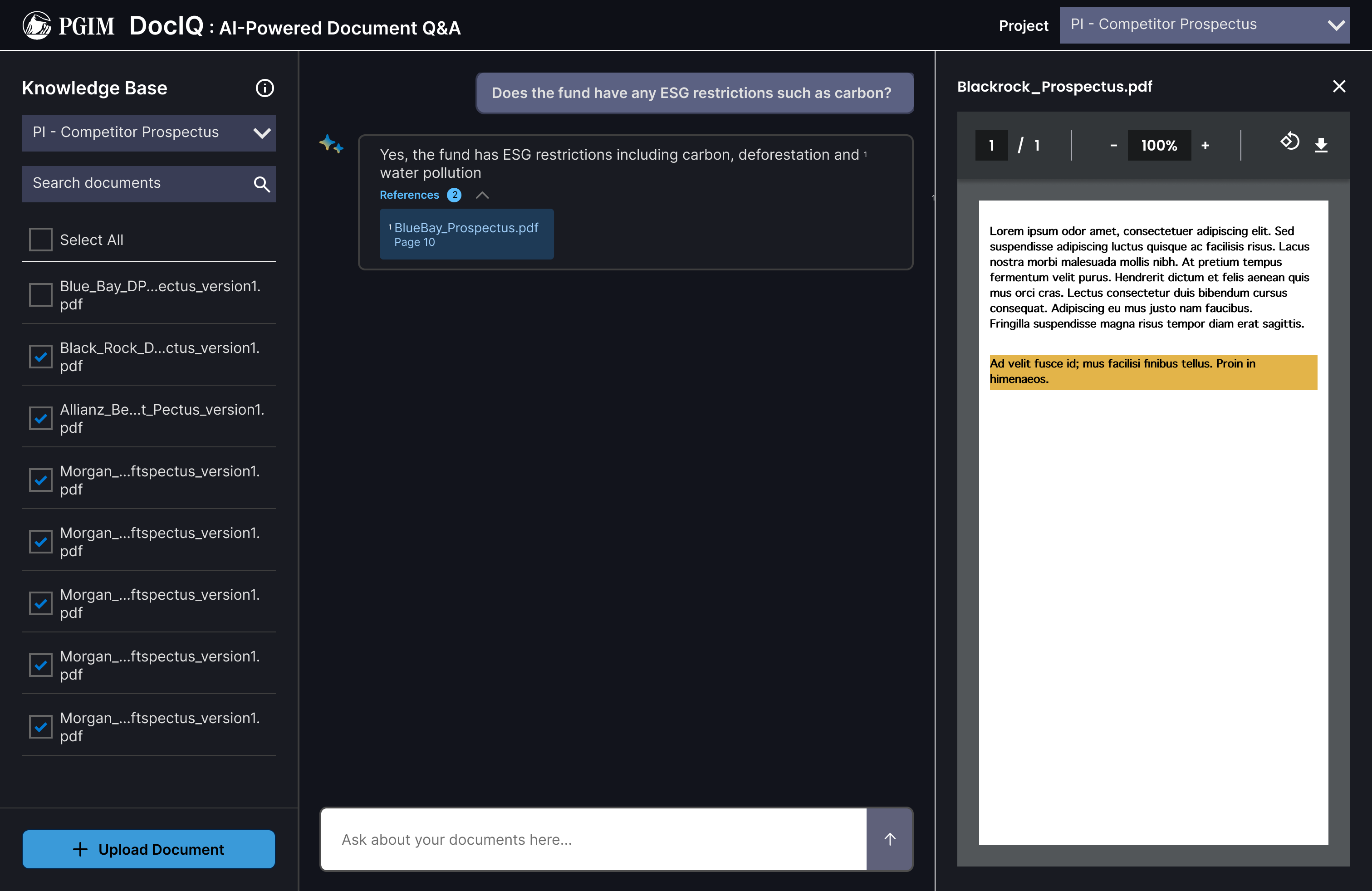
Every AI response includes reference chunks and links directly to the source document. Users can jump from an answer to highlighted text inside the original PDF.
Builds trust and reduces hallucination risk through verifiable citations.
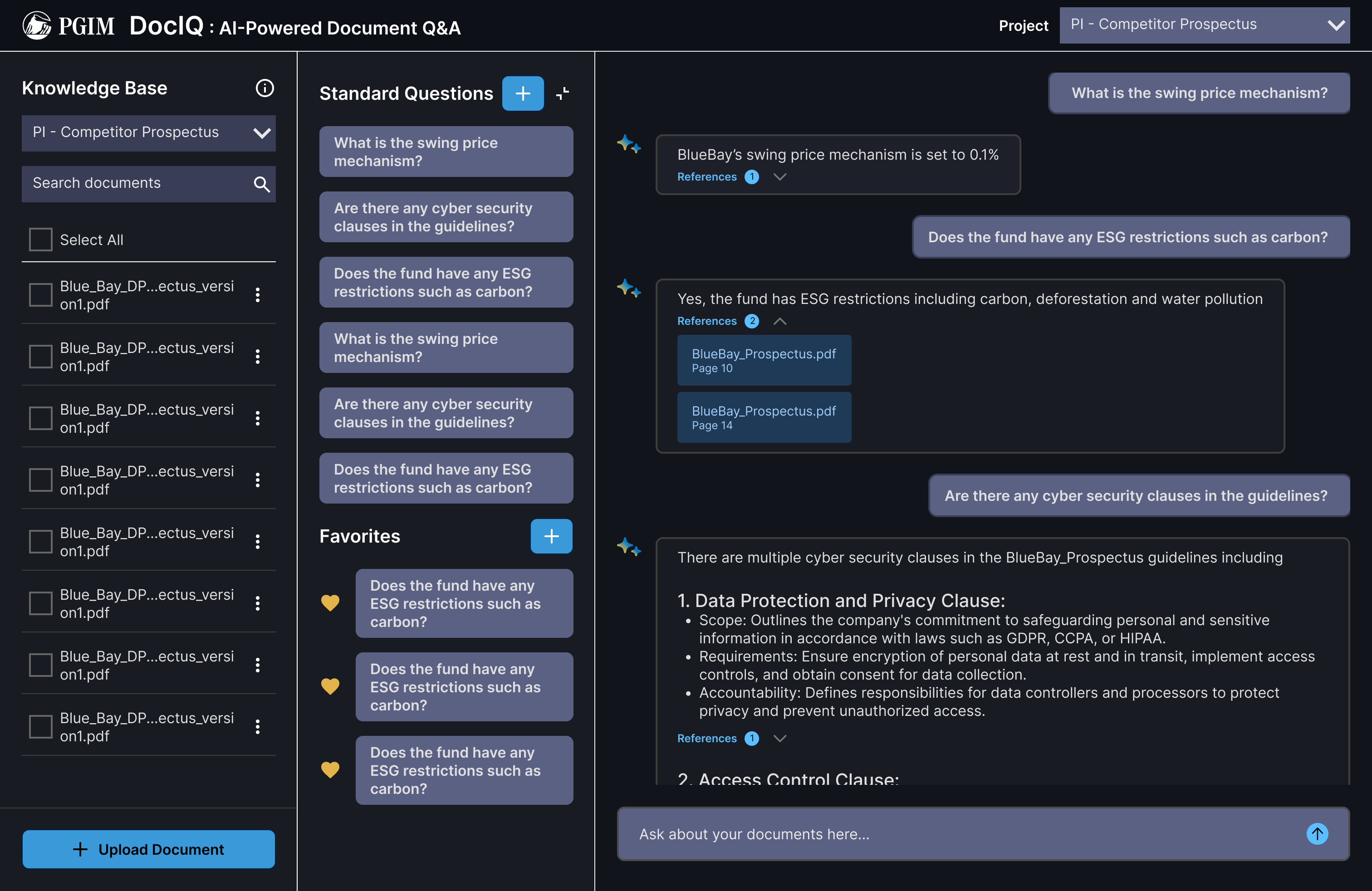
Users can select recommended questions or save frequently used prompts to speed up workflows. Reduces prompt friction and helps users get value immediately.
Lowered the barrier to entry for users unfamiliar with AI prompting.
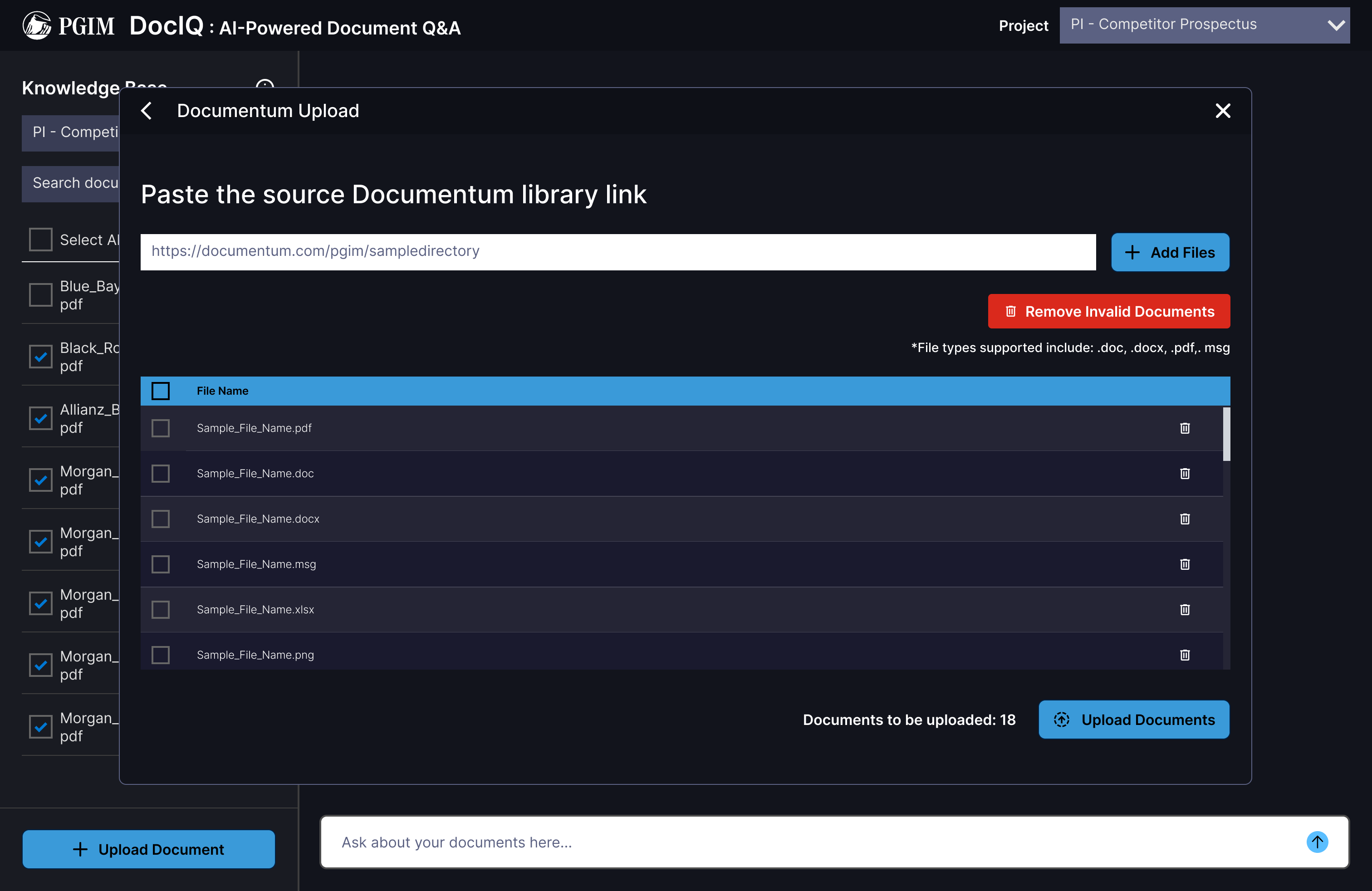
Admins can ingest documents from enterprise sources into the AI knowledge base. Supports scalable document analysis across teams and departments.
Enabled organization-wide adoption without manual document uploads.
Users expect 100% accuracy from AI. LLMs can hallucinate. Trust must be designed intentionally.
Every response is grounded in specific document passages, making answers verifiable.
Direct links from AI answers to exact locations in source PDFs for instant verification.
The AI communicates what it knows, what it doesn't, and where its answers come from.
What building with LLMs taught us about designing AI products.
Understanding how LLMs process text was essential to designing effective prompting flows and managing user expectations.
Learning when and why LLMs fabricate information shaped every design decision around trust and transparency.
Prompt engineering and system message architecture became a core UX design skill for controlling AI behavior.
Key insights from shipping an AI product in a regulated environment.
Users treat AI like a search engine. When it's wrong, trust breaks instantly. Design must account for this expectation.
Showing sources and confidence levels increased user willingness to rely on AI outputs in their workflows.
Working within the boundaries of enterprise tooling.
Power Apps enabled rapid deployment but introduced scaling and performance constraints we had to design around.
Dramatically reduced manual document review time across investment teams.
Professionals could extract key insights in minutes instead of hours of manual reading.
Established a trusted, internal GenAI workflow that became the model for future AI initiatives.
Introduced a fundamentally new way for teams to interact with and extract value from their document library.
"This project required me to wear two hats: product manager and product designer. I learned how LLMs work from a backend perspective, from tokenization and embeddings to retrieval-augmented generation. Understanding the limitations of AI and when hallucinations occur wasn't just technical knowledge; it became the foundation for every design decision. I designed transparency mechanisms to build trust, pushed Power Apps to its absolute limits, and delivered real value despite significant platform constraints. This experience fundamentally changed how I approach AI product design: start with trust, design for uncertainty, and never let the technology lead the user experience."